
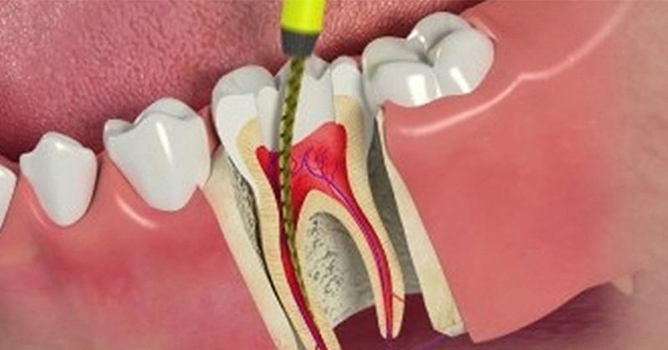
Endodontic treatment is a thing of nightmares for so many people. Societal fear from false statements and beliefs around root canal treatment has made it a rather unpopular procedure. People build up unrealistic ideologies about what happens during root canals and seem to believe they’ll be tied down to a table with a crazy dentist drilling and harvesting their teeth while laughing maliciously during a raging thunderstorm. Although fear and phobias are real-life difficulties, being properly informed and educated about procedures that scare you will help you manage your fear and possibly assist you in overcoming your fear as well. Root canals have been labelled as one of the most painful medical procedures when it’s actually less painful than dental extractions. Dentists have a difficult time breaking through the stereotypes society has given them, but the industry has continued to grow and thrive as more people come to realise the truth about dental procedures.
Misconceptions About Root Canals
Yes, root canals were painful years ago before the advancement of technology and anesthetics. Unfortunately, the poor reputation has followed the procedure for years, continuing the misconceptions associated with it. Well, technology has improved so much that root canals are no more painful than a filling, so it’s time to put an end to the hate on root canals and reveal the truth around the myths:
- Root canals are painful – the anxiety built up around the procedure is worse than the procedure itself. With local anesthetics and cutting-edge technology, root canals are on the low spectrum of pain.
- Root canals require several dentist visits – the procedure can be done in one to two appointments.
- Tooth extraction is better than a root canal – root canals save your natural tooth, preventing the need for artificial teeth such as dentures or veneers.
- Root canals drill through the whole tooth – only the top of the tooth is drilled into so the dentist can clean out the tooth’s inner chamber.
- Root canals cause illness – there is no scientific evidence to support the claim that a person is more susceptible to sickness and disease after a root canal.
As you can see, there are some rather outrageous misconceptions around root canals that need to be debunked. Root canals are a way to save your tooth and alleviate pain and discomfort caused by the infection. Don’t let fear be the cause of tooth loss.
Preventative Oral Care
We all know the obvious oral hygiene steps to maintain a healthy mouth, such as brushing, flossing and rinsing, but what more can we do to prevent tooth decay, gum disease, and the potential need for dental procedures?
- Avoid foods and drink high in sugar and acidity – sugar and acid break down the enamel, resulting in cavities and tooth decay.
- Use a mouthguard during sports activities – preventing damage to your teeth means you won’t require crowns or other repair procedures.
- Have regular visits with your dentist – frequent cleanings to remove tartar build-up and plaque minimize the risk of gum disease, tooth decay and oral infections.
Your oral health plays an essential role in your overall health, and with preventative oral hygiene, you can be sure to have a healthy mouth.
Listen To Your Teeth
Many people are satisfied with popping a pain pill when they experience toothache because it stops them from seeing the dentist. In some cases, medication may help, but if there is an underlying problem such as an abscess or cavities, making an appointment with your dentist is vital to save your teeth. If you leave the problem for too long, an infection may occur, making its way into the tooth and causing severe pain and discomfort. Once this has happened, you will need to have a dental procedure done, such as a root canal, to clean out the infection and repair the tooth, otherwise losing the tooth altogether. We feel pain and discomfort as an indicator that something is wrong, so listen to what your body tells you and seek professional help.
If you would like to find out more about root canal treatment or if you would like to make an appointment, call us today to speak to our friendly staff.