
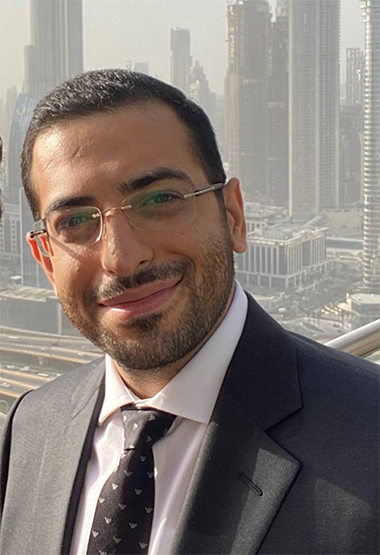
Interviewer: Dr. Motavaselian, you have an impressive career trajectory. Can you tell us a bit about your background and the motivations that led you to this path
Dr. Mohsen Motavaselian
From a young age, I was deeply drawn to problem-solving and helping others, which naturally guided me toward medicine. During my medical studies at Kerman University of Medical Sciences, I realized that medicine isn’t just about treating patients—it’s also about contributing to the broader body of scientific knowledge. This realization sparked my passion for research, where I saw an opportunity to make an impact that extends beyond individual patient care to influence the future of medicine
Interviewer: What challenges have you faced throughout your career, and how have you overcome them
Dr. Mohsen Motavaselian
One of the biggest challenges was balancing clinical responsibilities with my research. During my time at the emergency unit, I spent nights treating patients and days working on research projects. It was demanding, but it taught me the value of time management and setting clear priorities. Another challenge was the limited resources available for certain studies, which required creativity and a resourceful approach to achieve meaningful outcomes
Interviewer: What sets your research apart from others in your field
Dr. Mohsen Motavaselian
I’ve always aimed for my research to be both innovative and practical. For instance, in a study on using MRI to diagnose acute appendicitis in pregnant women, we explored safer, less invasive diagnostic methods for this sensitive group. Another key project was evaluating the risk of intracranial hemorrhage after mechanical thrombectomy in stroke patients, helping clinicians assess risks more effectively. The practical implications of my research make it impactful and unique.
Interviewer: Artificial intelligence (AI) is revolutionizing medicine. How have you incorporated AI into your work
Dr. Mohsen Motavaselian
AI has immense potential, particularly in radiology. I’ve been part of projects utilizing deep learning and advanced image processing to enhance disease detection and diagnostic accuracy. For example, we’ve developed algorithms that analyze CT and MRI scans, enabling quicker and more precise clinical decisions. My hope is to make these technologies accessible, even in resource-limited settings, to improve global healthcare outcomes
Interviewer: Which of your accomplishments do you take the most pride in
Dr. Mohsen Motavaselian
One of the highlights of my career was conducting a meta-analysis on the diagnostic performance of imaging in detecting small bowel obstructions. This research provided valuable insights for clinicians worldwide, advocating for less invasive diagnostic methods. Another proud moment was the publication of our study on stroke-related hemorrhages, which received widespread recognition within the medical community
Interviewer: What advice would you give to young researchers or medical students
Dr. Mohsen Motavaselian
My advice is to embrace challenges and learn from failures. Science is a journey of constant learning, and every obstacle is an opportunity to grow. Networking is equally crucial—building connections with peers and experts can open doors to collaborations and new opportunities
Interviewer: What’s next for you in your career
Dr. Mohsen Motavaselian
I plan to focus on developing AI-driven diagnostic tools that facilitate early detection of diseases. Additionally, I aim to expand my research into cancer and minimally invasive therapies. My ultimate goal is to bridge the gap between cutting-edge research and its real-world application, improving patient outcomes on a broader scale
Interviewer: Finally, what drives your passion and keeps you motivated
Dr. Mohsen Motavaselian
Seeing the tangible impact of my work on patients’ lives is my greatest motivator. Whether it’s a research finding that changes clinical practice or a new diagnostic tool that improves accuracy, these moments reaffirm my commitment to this path. The idea of contributing to a better future through science inspires me to keep pushing forward